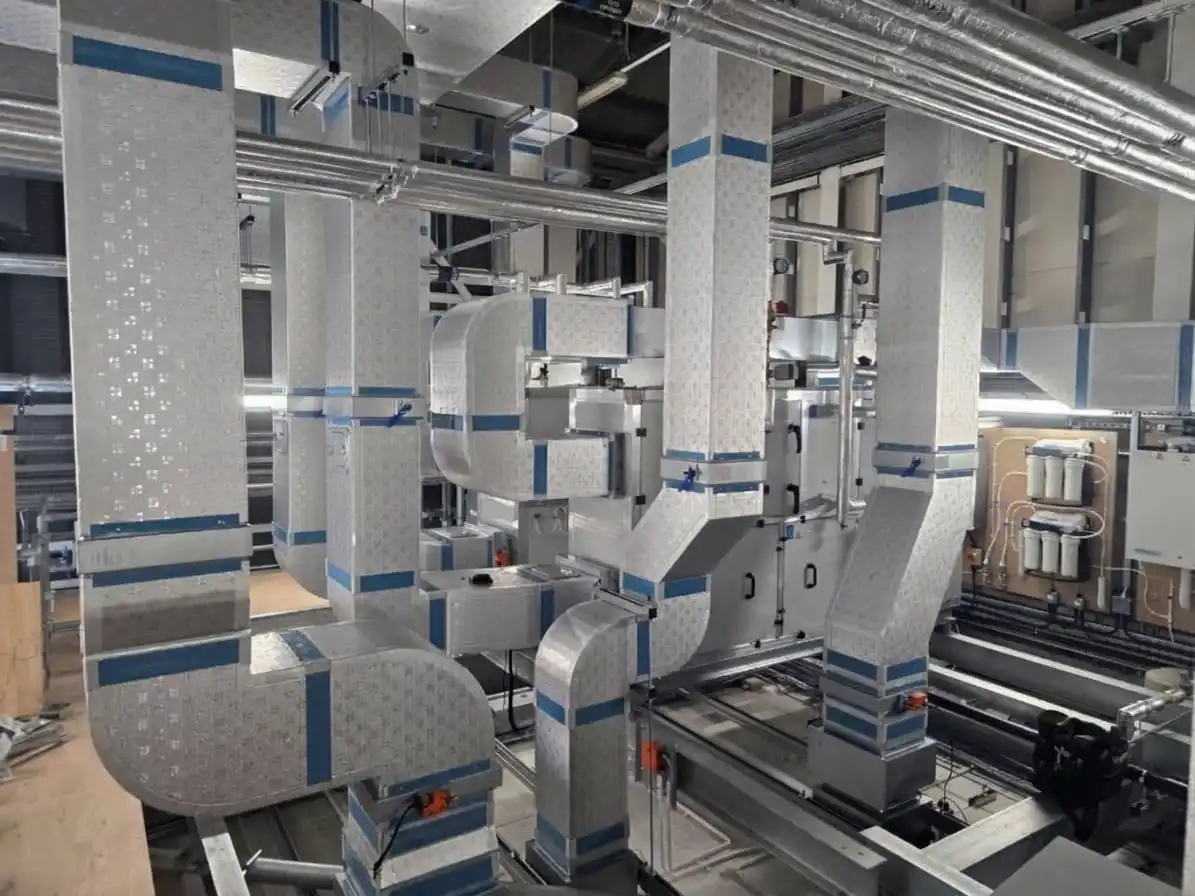
U.S. diplomatic facilities are among the most demanding buildings a mechanical contractor can deliver. They must run continuously, often far from spare parts and specialist support, and they are built to the specifications of the U.S. Department of State Bureau of Overseas Buildings Operations (OBO) on top of U.S. codes such as NFPA, ASHRAE, IPC, IMC and IFC.
The specification comes first
On an OBO project the specification is the rulebook. Every submittal, from chillers and air handling units to fire pumps and fuel-oil day tanks, is checked against it before anything is ordered. Getting submittals right early protects the programme: long-lead equipment shipped to a remote site leaves little room for a second order.
Coordination before installation
Embassy compounds bring HVAC, plumbing, fire protection, building automation, fuel-oil distribution and underground utilities together in secure, tightly planned spaces. Coordinated shop drawings and BIM models resolve clashes on screen, so site teams install once and install right.
Quality control on site
Inspection and test plans (ITPs) define what is checked, when and by whom. Material verification, pressure tests, duct leakage tests and witness points are recorded as the work progresses, so the handover documentation grows with the installation instead of being assembled at the end.
Testing, commissioning and handover
Systems are proven, not assumed. Testing, adjusting and balancing (TAB), functional performance tests and integrated system verification show that HVAC, fire protection and controls work together under real operating conditions. Handover includes as-built drawings, operation and maintenance manuals and training, so the facility team can run the building from day one.
A way of working
Delivering embassy projects in countries from Guinea and Cameroon to Nepal and Kyrgyzstan has shaped how TERMA works: specification-led, documented and verified. The same discipline benefits every project we deliver, whatever the sector.