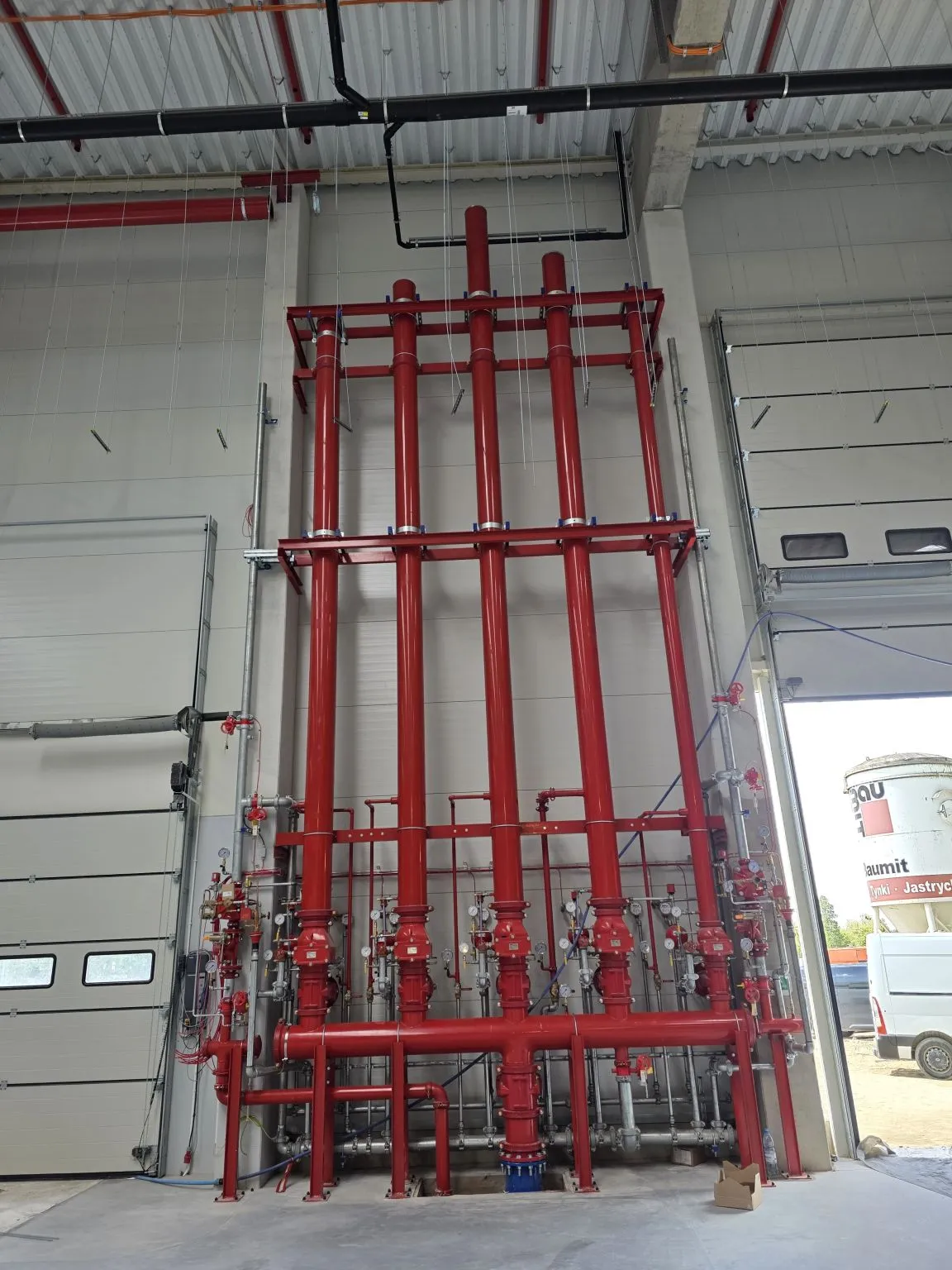
High-rise buildings change the fire protection problem. Evacuation takes longer, fire department access is vertical and water has to be delivered at the right pressure to floors hundreds of metres above the pumps. The systems that protect these buildings must work the first time, after years of standing idle.
Pressure zoning
Static pressure grows with height, while sprinkler and standpipe components have maximum pressure ratings. Tall buildings are therefore divided into vertical zones, served by separate pumps, high-level tanks or pressure-reducing valves. NFPA 13 and NFPA 14 set the limits; the design must respect them at every outlet, not only at the pump.
Water supply and fire pumps
Fire pumps installed to NFPA 20 are the heart of the system. Reliability comes from redundancy in power supplies and pumps, dependable water storage and controllers that are tested regularly. Where the public supply is limited, dedicated fire water tanks are sized for the required duration.
Interfaces with other systems
Sprinklers and standpipes work alongside fire alarm, smoke control, stair pressurization and elevator recall. Flow switches, tamper switches and control panels must be coordinated with the electrical and life-safety designers so that the whole building responds as intended.
Testing before handover
- Hydrostatic tests on new piping, typically at 200 psi for two hours under NFPA 13, or higher where working pressures demand it
- Flushing of underground mains before connection
- Fire pump acceptance tests at churn, rated and peak flow
- Flow tests at the hydraulically most demanding outlets
- Integrated tests with the fire alarm and smoke control systems
Long-term reliability
Inspection, testing and maintenance to NFPA 25 keep systems ready: valves remain open, pumps start, and alarms report. Clear as-built drawings, labelled valves and trained facility staff are as important as the original installation.