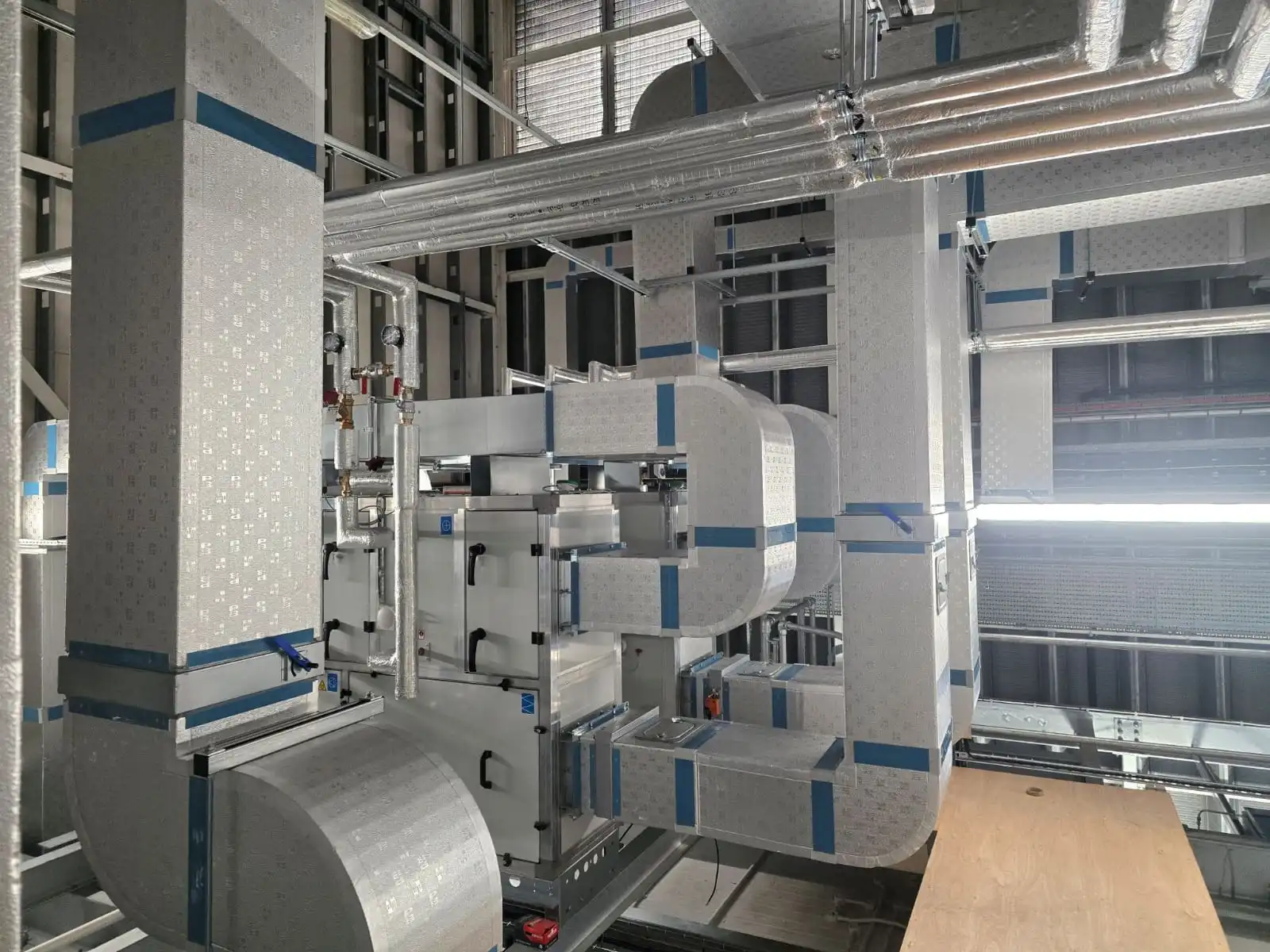
In a hospital, the HVAC system is part of patient care. It controls the spread of airborne infection, protects vulnerable patients, keeps operating rooms within tight conditions and supports equipment that cannot tolerate interruptions. The requirements are stricter than in any commercial building.
Standards that set the baseline
ASHRAE 170 (Ventilation of Health Care Facilities) defines minimum air change rates, pressure relationships, filtration, temperature and humidity for each type of space. NFPA 99 covers health care facility systems such as medical gases, and local regulations add their own requirements.
Pressure relationships
Air must move in the right direction. Operating rooms and protective environment rooms are kept at positive pressure to keep contaminants out; airborne infection isolation rooms are kept at negative pressure so that contaminated air does not escape. Monitors at the room entrance allow staff to verify the condition at any time.
Air changes and filtration
Critical spaces require high air change rates and multiple filter stages, with high-efficiency filters on the supply to operating rooms and HEPA filtration where patients are most vulnerable. Filters are only as good as their seals, so housings and access for safe filter changes matter as much as the filter rating.
Temperature and humidity
Surgical teams, patients and sensitive equipment need stable conditions. Humidity control limits both static and microbial growth, and systems must hold set points across seasons and loads.
Reliability and maintainability
Hospitals operate continuously. Redundant fans, chillers and pumps, emergency power for critical systems and layouts that allow maintenance without shutting down clinical areas are essential.
Verification at handover
Testing, balancing and commissioning prove that every room achieves its design air changes and pressure relationship. TERMA has delivered complete mechanical scopes for hospitals including the 400-bed hospital in Najaf, Iraq, and the Zarifa Aliyeva Ophthalmology Hospital in Baku, built to standards including NFPA 99, NFPA 101 and ASHRAE 170.